How much does a concrete coating cost?
Pricing is driven by square footage, slab condition and the finish you pick. A standard two-car garage is the most common job we quote. We measure on site, factor in any crack or spall repair, and give you one firm written price — no hourly surprises. Estimates are free anywhere in our service area.
How long does installation take?
Most residential floors are ground, repaired, coated and topcoated in a single day. You can walk on the floor the same evening and park a vehicle on it after about 24 hours. Large commercial spaces may take two days or get phased across a weekend.
Polyurea vs. epoxy — which do you use?
We install both, all from Simiron, and choose based on the floor. Polyurea is more flexible (rated -30°F to 140°F), cures in hours, resists hot-tire pickup and pairs with a UV-stable polyaspartic topcoat, so it's our default for garages, driveways and outdoor surfaces. Professional epoxy is a solid, cost-effective choice for lower-traffic interiors like basements, workshops and utility rooms. We'll tell you which fits your slab and why — it's never a one-size-fits-all call.
Will it peel like the store-bought kits?
Peeling almost always traces back to prep. DIY kits rely on an acid etch, which doesn't open the concrete profile enough for a mechanical bond. We diamond grind every slab with commercial equipment, so the coating keys into the concrete itself.
Can you coat a cracked or spalling slab?
Yes. Crack, joint and spall repair is part of a normal installation. The exceptions are structurally failing or actively heaving slabs — if that's what we find, we'll tell you before you spend anything.
What about moisture in a basement or on grade?
We check the slab before quoting. Ordinary vapor transmission is fine for our systems. Active water intrusion needs to be corrected first, and we're straightforward about that rather than coating over a problem.
How do I clean and maintain the floor?
Sweep or blow it out, and mop with a mild cleaner. No waxing, no sealing, no re-coating schedule. Oil, gas, brake fluid and antifreeze wipe up rather than soaking in.
Is there a warranty?
Simiron residential systems carry a lifetime warranty against peeling and delamination. Commercial warranty terms depend on the system and traffic and are spelled out in the quote.
Can you install in cold weather?
Polyurea has a much wider installation window than epoxy, so we work later into the Missouri cold than most contractors. Extreme conditions may shift a schedule, but winter is not automatically off the table.
Do I need to be home during installation?
For a garage or driveway, no — just clear the space and give us access. Basement and interior work usually goes smoother with someone available at the start and finish.
How do I choose a chip color?
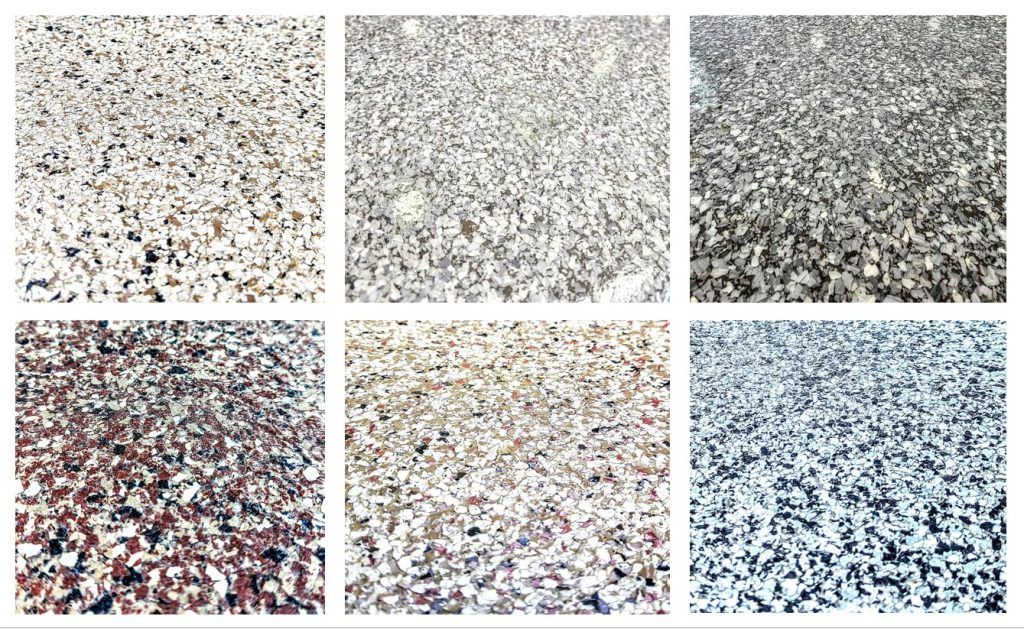
We bring samples to the estimate. Busier blends hide dirt and slab imperfections best, solid colors read industrial and clean, and metallics suit showrooms, basements and entryways.
Do you coat commercial buildings?
Yes — shops, aircraft hangars, warehouses, kennels, clinics, breakrooms and showrooms. We schedule nights and weekends specifically to keep your downtime near zero.